
How Much Revenue Is Your Payment Network Losing to Downtime?
When a payment network slows down for even a few minutes, the damage spreads fast. Transactions fail, merchants lose sales, and support queues fill up.
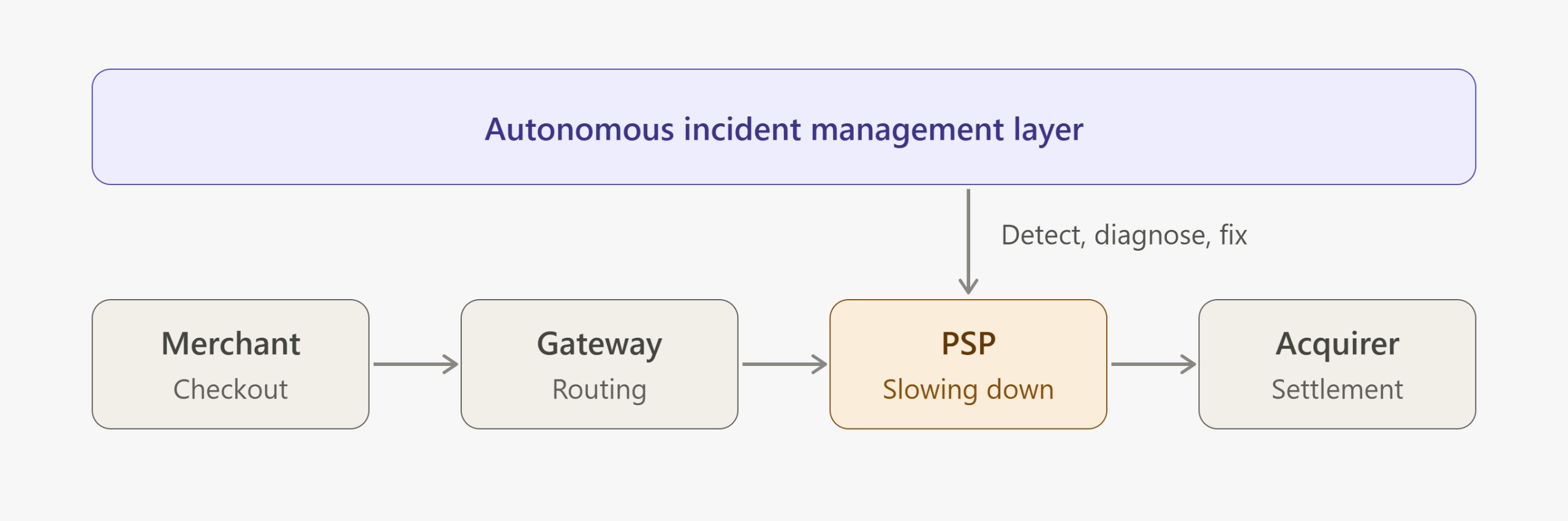
For banks, PSPs, and acquirers running high-frequency payment systems, the question is no longer whether an incident will happen, but how quickly it can be detected and fixed. This is where AI incident management is changing how financial systems stay available.
What Does Reacting Too Slowly Really Cost Your Payment Network?
Traditional incident response was built for a slower world. An alert fires, an on-call engineer wakes up, and the team starts sifting through logs across dozens of services to find what went wrong. Manual root cause analysis can take hours, and every minute of downtime during peak transaction windows translates directly into lost revenue and strained merchant relationships.
Alert fatigue makes it worse. Monitoring tools generate thousands of notifications, most of them noise. Teams start to tune them out, and the one signal that matters gets buried. Add the pressure of regulatory scrutiny and strict SLAs, and operations teams find themselves firefighting instead of improving the platform.
How Can Payment Systems Detect, Diagnose, and Resolve Incidents Automatically?
Autonomous incident management shifts the work from people to the platform. Instead of waiting for a human to connect the dots, AI root cause analysis correlates signals across infrastructure, applications, and transaction flows to pinpoint the source of a failure in seconds. From there, automated incident remediation can restart a service, reroute traffic, or roll back a faulty release without waiting for approval chains that were designed for slower times.
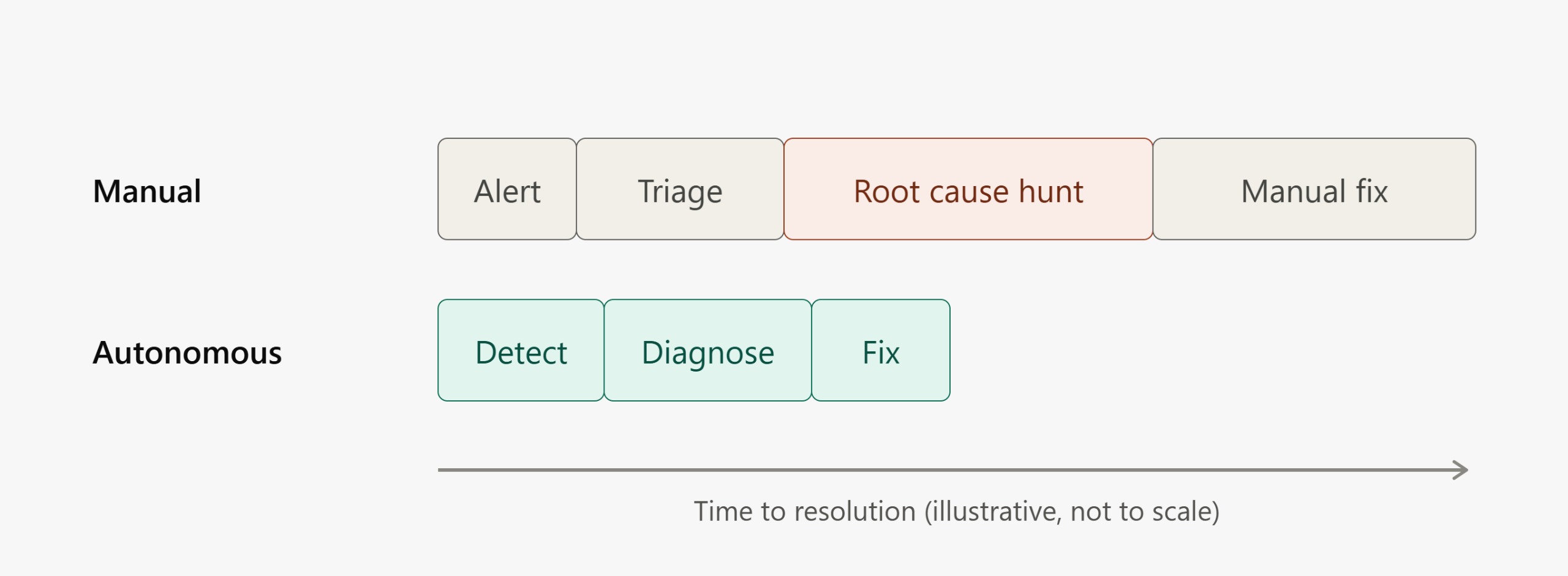
This is the practical value of AIOps incident management and AI site reliability engineering. Engineers still set the policies and guardrails, but routine production incident automation handles the repetitive first response, leaving experts free to focus on complex problems and long-term stability.
How Autonomous Incident Management Drives Merchant Onboarding and Scale
Reliability is not just an internal metric. It shapes how merchants experience your platform from day one.
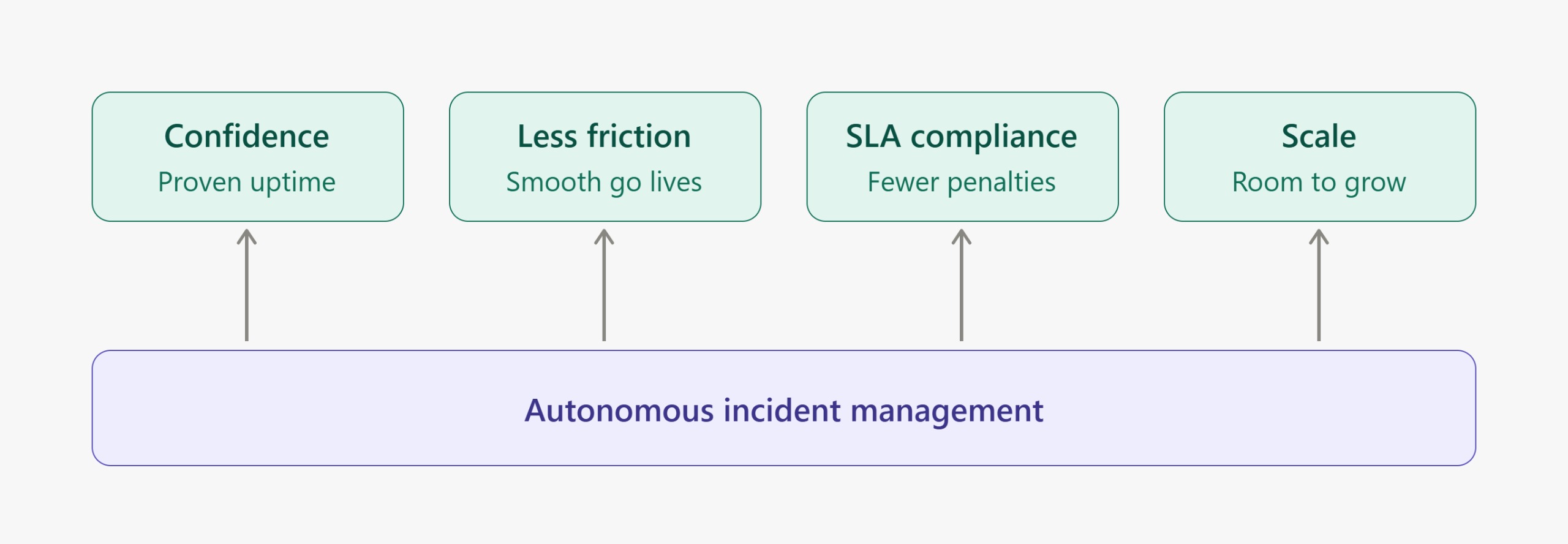
Greater onboarding confidence: Merchants, especially large enterprises, evaluate uptime history before they commit. A platform with AI-powered incident response can show a credible record of fast recovery.
Less onboarding friction: Integrations and go-live events are vulnerable moments. Autonomous monitoring catches issues during testing and launch, so merchants are not left waiting on delayed fixes.
Enterprise SLA compliance: Faster detection and resolution keep you within contractual uptime and response commitments, which reduces penalties and protects renewals.
Room to scale: As transaction volumes grow, autonomous IT operations absorb the extra load without a matching increase in operations headcount.
Is Resilience Your Next Competitive Advantage?
For banks, PSPs, and acquirers, uptime is now a deciding factor in who wins and keeps high-value merchants. Teams that move from reactive firefighting to autonomous operations spend less time recovering from failures and more time building products and winning new business.
At ina Payments, we provide dedicated solutions to streamline operational reliability for financial institutions.