
AI Voice Ordering Is Moving From Customer Experience to Payment Infrastructure
Voice ordering has been around for years. What has changed is the layer behind it. With conversational AI becoming capable of handling product discovery, modifications, cart building and checkout conversations, restaurants and QSRs are moving from simple voice interfaces toward a more complete AI voice ordering system. The bigger question for payment companies is what happens when that conversation reaches the transaction layer.
What is actually changing with conversational AI ordering?
The shift is from voice as an input method to voice as an ordering interface. A customer can ask for an item, change a modifier, add another product, ask for the total and confirm the order without navigating a conventional menu. For restaurants, that creates a new interaction channel across phone ordering, drive-through and kiosk environments.
But the AI ordering assistant cannot simply generate an answer and place an order. Menu availability, modifiers, pricing and order rules still need to come from controlled business logic.
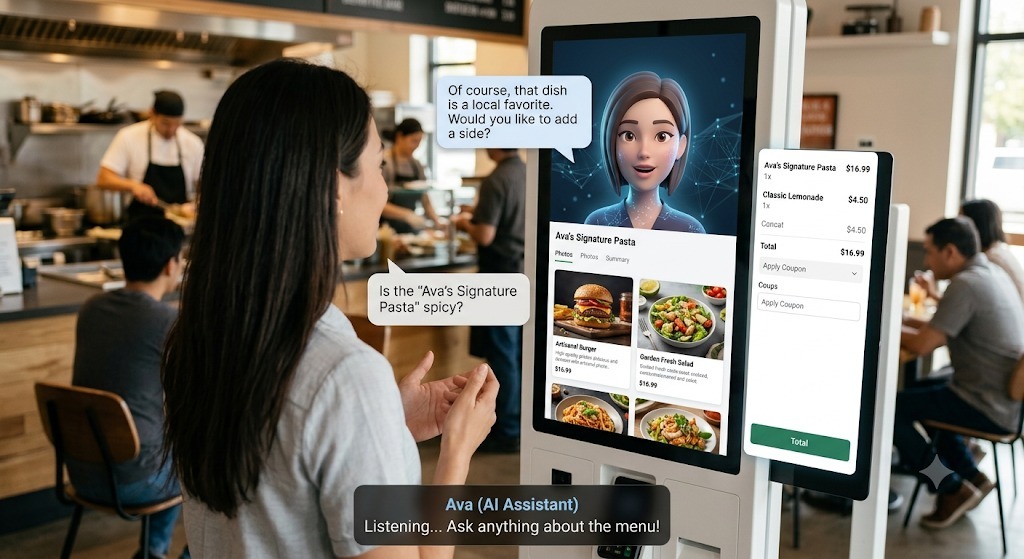
Where does the payment problem start?
Checkout is where conversational commerce AI needs more discipline. An AI customer ordering assistant may understand what the customer wants, but it should not independently determine what the customer should be charged. The final cart, pricing and order state need to be validated before payment.
This distinction becomes particularly important when conversational AI for payments connects to an existing POS, payment gateway or ordering infrastructure. The conversational layer interprets the customer. The transaction infrastructure remains responsible for the transaction.
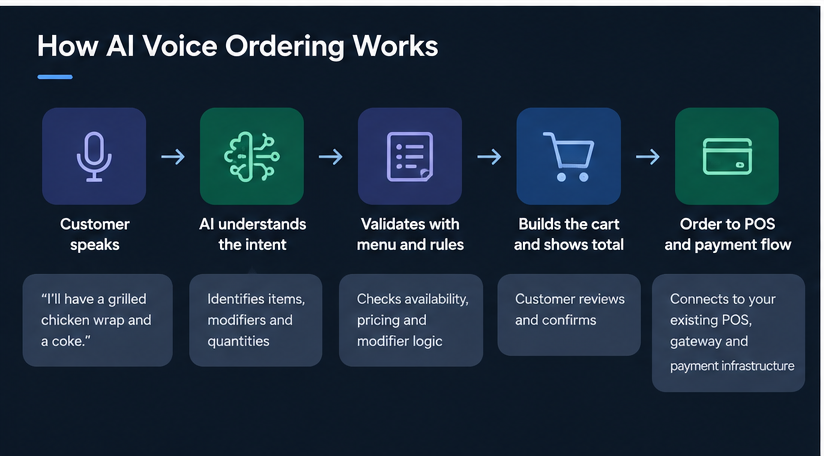
How should an AI voice ordering assistant handle checkout?
A practical voice based ordering platform needs a defined transition from conversation to transaction.
Customer speaks with the assistant.
AI identifies the ordering intent.
Menu and modifier data validate the request.
Cart is built and pricing is calculated.
Customer reviews and confirms the order.
Order moves to the existing POS and payment flow.
The important part is the separation between what the AI understands and what the payment system executes. That makes voice AI for restaurants less about replacing existing infrastructure and more about adding a new customer interaction layer on top of it.
Where does an infrastructure partner add value?
The challenge is making AI handle an order accurately while keeping pricing, menu rules and the payment flow under control. That is where we built ina AvA (AI based Cashier) (AI based Cashier), an AI voice ordering assistant that connects conversational ordering with menu validation, order processing and a controlled checkout flow.
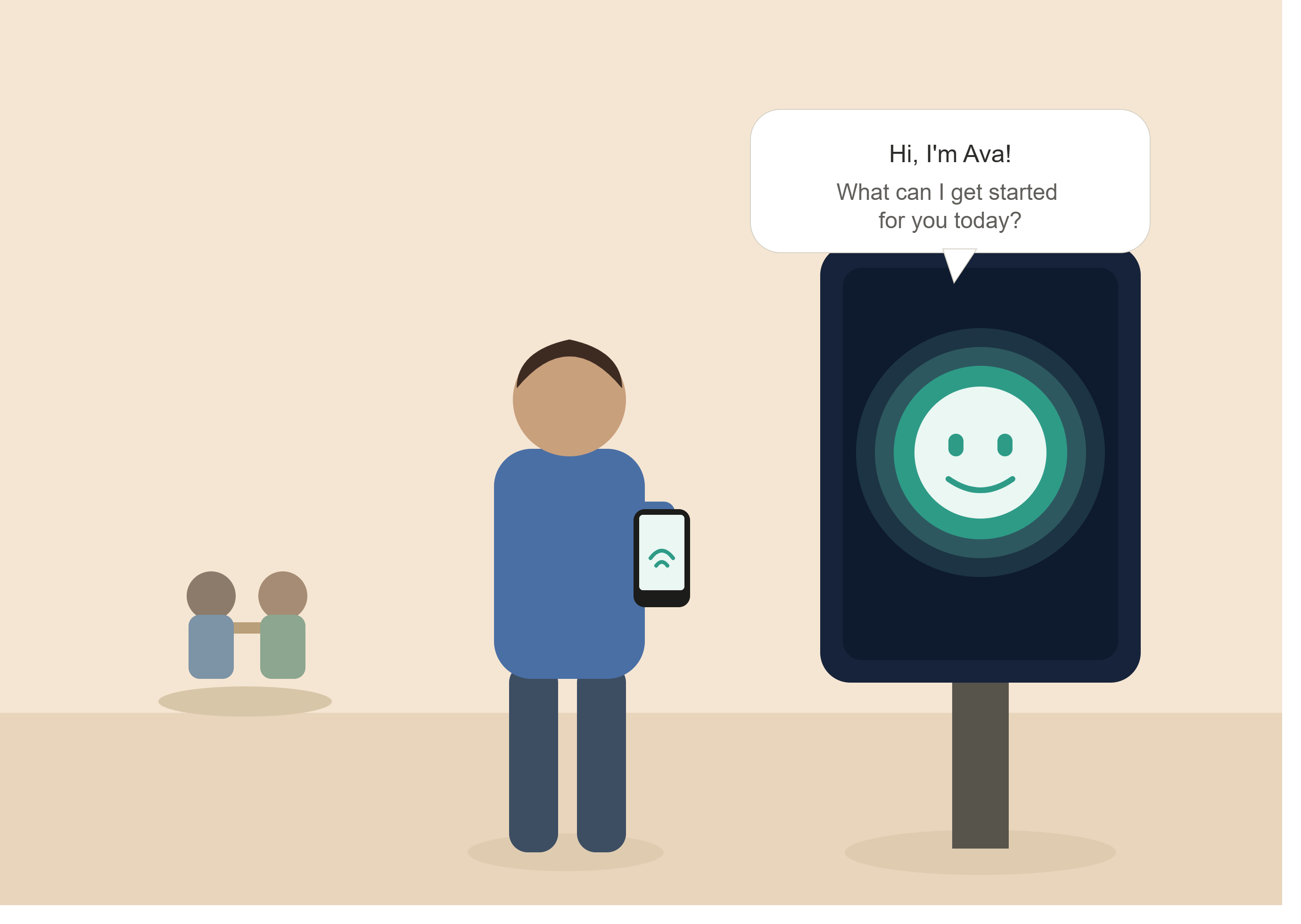
For PSPs, acquirers and restaurant technology platforms, ina AvA (AI based Cashier) (AI based Cashier) also works as an AI powered checkout assistant, letting AI handle the conversation while existing payment infrastructure handles the transaction.
The goal is simply to make voice ordering reliable enough to become a real transaction.